
ARTICULATE LAUREATES

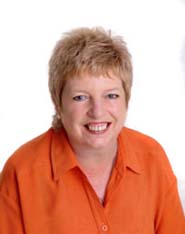 Lindsay Balderson
 |
|


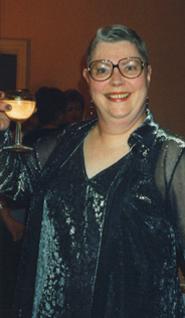 Joanna Boulter
 |
|
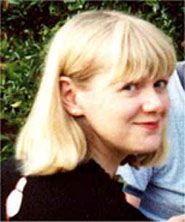 Diane Cockburn
 |
|
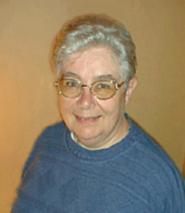 Anne Hine
 |
|
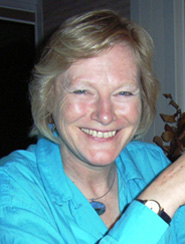 Pru Kitching
 |
|
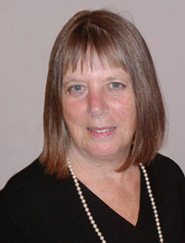 S.J. Litherland
 |
|
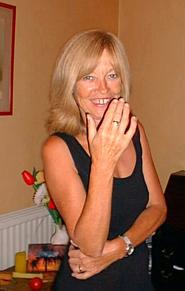 Dorothy Long
 |
|
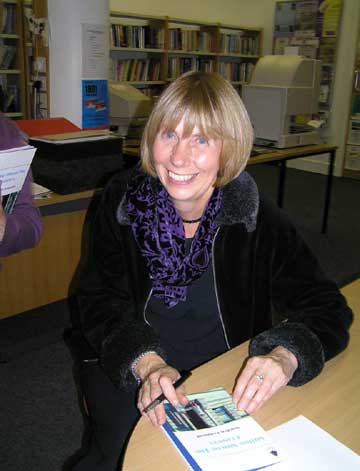 Marilyn Longstaff
 |
|
 Pat Maycroft
 |
|
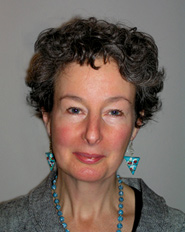 Chris Powell
 |
|
 Annie Wright
 |
|
|
HOME PAGE |
You've read the biographies of our articulate laureates, now continue to read a selection of their work. |
FORTUNE TELLER, KYOTO
The still, jasmine-scented evening air hangs heavy.
With nervous anticipation, she slowly approaches
the low, white building which lies ahead, fists clenched
in quiet determination.
A white-barred grille partitions house from street.
Hands, slick now with cold perspiration of anxiety,
pull tentatively at the chimes which herald her arrival
with jangling insistence.
Screens slide, a glance of wisdom takes an instant snapshot.
Deep, brown wells of eyes betray a flash of 'knowing',
Eastern mysticism meets Western scepticism
in shared curiosity.
With an incline of the head and a sweep of the arm,
the Fortune Teller of Kyoto bids her enter the silent room.
By moonlight and flickering lantern-light, they sit at the low table
in focused collaboration.
Haunting, oriental music, steals in through an open skylight,
as the Japanese seer, hand upturned, reaches out in invitation.
Her client, no longer afraid, offers her deeply-etched palm, exposing
her life's blueprint.
A VISITATION
How to respond? when an angel comes tobogganingwhee down over the arch of a rainbow
(leaving a snazzy multicoloured trail)
and ends up tumbling heels over haloto land thigh-high in a stand of lilies?
What to do? You brush pollen
from his white nightie, find your comb for his wings;but this isn't what he came for. His narrow feet
grow restless as rollerblades: now he's dangerous,
a grounded comet. The air fizzes round him.The lake is lapis, the trees are all enamelled
in emeralds, the courtyard gravelled with diamonds.
But his ruby lips are tight buttoned.There are angels who bring messages, who ask riddles -
but this one has skied down out of heaven
to perch precarious as a rocket in a milk bottle,ready to explode the everyday. He's waiting.
You have to take a chance. And what you do
is write him a flower, pick him a bunch of poems.
ADVICE ON BEING OFFERED HAWTHORN BLOSSOM
Hawthorn sprigs shimmer pink, shimmer white.
Scent strong as butter, intoxicating as burnt feathers.
Do not pick the Fairies' flower! It leaves
black luck, slams hedges shut,
sours milk and steals babies, it leaves
changelings mewling in other-world falsettos,
blasted crops, twisted faces.Hawthorn trees glow with caged light,
feeding off moonbeams.
Branches are Fairy fiddle-bows,
bluebells cluster like courtiers,
farmers plough round them, turn a blind eye, as
Little People burrow at their roots for suck.Blackthorn knobbles are their runic notches.
Petrified bones stained black with bog juice,
demon faces peep out of knot holes,
black as pitch, black as pickled hearts, their
hidden power crackled into blossom.
Guilty bumble bees cross themselves in flightpath,
as they carry back
unfortunate pollen to hives, and their babies grow
fairy faces and lap honey with furry tongues.Not knowing, I pick a tight bunch for my mother,
her face lets me know, barely concealed superstition
fumbling with the cross at her neck.It sulks outside on the windowsill,
tiny eyes watch from their bushes,
daring us to take it in.
OUT OF WHOM SEVEN DEVILS WERE CAST
I am she, yes the one
Out of whom seven devils were cast,
Only seven?Now know myself a free woman
No more a slave, a pawn, a plaything.Liberated from lust
I honour my being
dress my hair, clothe myself decorously
Cease provoking, alluring and sly looks.I have found my centre,
My anchor,
My still point,
A new trust.For a compassionate heart loved me
With an unconditional love.
Did not ask my body in return,
Or my kisses, entanglements, or services.
Saw through my treacherous insecurities
And brought to life the "who I am".You can say what you want.
Mutter darkly in your hearts
- we know who she is -
No, No, I say: who she was
who she was.Keep your purses closed
There's no gold can buy me now.
I AM
one who thinks too much
and drinks too much
one whose blue eyes blink too much
and whose pale skin pinks too much
one for whom politics stink too much,
who thinks there's a nod and a wink too much
one who is on the brink too much,
whose heart is prone to sink too much
one whose ego shrinks too much,
whom life will always jinx too much
one whom the gods think out of synch too much
and one who is destined to flinch too much.
ANEIRIN AND THE SEA
He is singing his world into existence,
the baby is crooning, not simple agoos
but a long discourse, his eyes, the first eyes
of addressing the audience in waiting.He has learnt people croon these sounds
to each other, these long singing phrases,
and nod and smile and gesture. Not only people
he speaks to in their first language beforewords, he is changing his world into sound.
This first ever naming, trapped in a baby's
mouth in fossil crooning, halfway between singing
and talking, this Ur-language faithfullykept in the books of his body, encoded,
recorded. Aneirin sings of the world and sings
to the world. Next day we present him to the sea.
The sea is casting noises on the shore, crunchingwater with a heavy beat, returns and lingers.
The sea a melody, the first music, the crooning wind
talking as wood talks, the pram on the sand
hushing, hushing, and clicking and clicking,the dog rustling his paws, air thinly vibrates
with gull swoops and gull call, we are chatting and
laughing, catching words in a ball and tossing
back, the world is ariel, aural, all spacesresounding. I show Aneirin the sea constantly
moving itself, and think the ancients were right,
stars must be singing in the high register
of light. At home Aneirin reports to us,translating his three month old world, his eyes
concentrated on this, his first poetry,
for poetry it is, half talking, half singing,
a reincarnation of first soundsin the first people, the world emerging
into words not yet words, phrases not yet phrases,
yet phrased and strung, this precious necklet
not yet a necklace, and wonder catches us
wonder catches people, So young and he sounds
as if he's talking. Aneirin is crooning of the sea,
of paintings on the wall, of floating
conversations, of the inborn when it was born.
NO RANDOM LOVING
No random tracing, this,
Fingers framing tacitly
The words we needn't say.
Fingers, merest breath of hovering air,
Claiming, learning again
This line from hip to shoulder.
Words and bones articulating,
Back and belly undulating.
No random murmuring, this,
These words breathed softly, lip to lip
The words we want to say.
Mouth, merest breath of hovering air,
Stroking, loving again
This line from neck to knee.
Limbs frame thoughts intently
Bodies moving gently.No random coupling, this,
Movement forming, making
The words that ever say,
My dearest, this caress of hovering air
Tracing, reading again
This line from hair to toe,
Is passion's expression
Of a love, an obsession.
ABANDONED
after the title of Naomi Dum Blake's sculpture.This is in the garden (at Beth Shalom Holocaust Memorial Centre) which she has dedicated to the Dum family's ten grandchildren, who perished in Auschwitz.
It's important that there is a record
in the heart of the English countryside.
'Out of the depths have I called thee, Oh Lord.'
'Why do you forget us? Where do you hide?'
In the heart of the English countryside,
Beth Shalom - I assumed was run by Jews;
Why do you forget us? Where do you hide?
In undertaker's suits and unbrushed shoes?
At Beth Shalom, which I assumed was run by Jews,
two Christian brothers, trying to make amends,
in undertaker's suits and unbrushed shoes.
For those who never returned - families and friends,
two Christian brothers trying to make amends.
Formal rose gardens, in memory
of those who never returned - families and friends,
honour 'their courage and their dignity'.
Grandchildren's garden. In memory,
Naomi Blake, sculptress, moulds sadness and rage,
honours 'their courage and their dignity'.
For each, a red rose, a plaque with name and age.
Naomi Blake, sculptress, moulds sadness and rage
for millions who died, those dying now,
for each a red rose, a plaque with name and age.
From Rwanda, Auschwitz-Birkenau,
for millions who died, those dying now
it's important that there is a record.
From Rwanda, Auschwitz-Birkenau,
'Out of the depths have I called thee, Oh Lord.'
INGLENOOK II
In silent significance
she stands waiting
clothed in black
windowed to invite you in.Mounted on ancient bricks
thumbed by men, she
beckons for a light.
This Flemish tart kindles well.Illuminated in waxy sweetness
she draws in and exhales
with smouldering eyes.
Candles flicker.Backed onto warm stone
surrounded by pine timbers
she lays out her stall.
An array of trinkets.A smooth pebble lifted
from the beach.
A flat iron without laundry.
An Arabian coffee pot to simmer.Embrace her now as the glow
fills her cheeks.
The silence is significant.
She lies waiting to pleasure.
Extract from ADELE'S AMAZING ELECTRIC SHEPHERD
She wore a white blouse, a white gathered skirt she made herself in sewing classes, white pumps and a silver cross, engraved with fleur-de-lys. The cathedral roof swam with angels, the air cracked and spat out blue stars. Each precisely parcelled and shrink-wrapped movement of muscle took her closer to the sunburst of splintered ice through the eastern window. Every marble-flagged footstep, bone-cold through the thin soles of her shoes, cancelled out a sin. She knew that as surely as she knew about French irregular verbs, how electricity was conducted and that the nave, built in the fourteenth century, was the longest in Europe. Stone bishops skulked in the shadows, she recited their names like a protective credo: Walkelin, Wayneflete, William of Wykeham, Beaufort, Langton and Fox.When she neared the end of the line she heard the flesh and blood bishop saying his words over and over again. This was nothing like all those practice sessions with shavings of water biscuit - how to let it lie on your tongue, how to swallow without biting or choking, how to generate enough saliva so it doesn't cling like ripped nylon to the back of the throat. The swallowing was always so difficult. She was thirteen years old; she hadn't eaten for six days, saving herself up for Jesus, serving herself up to God and it didn't matter that this was the wrong religion, in matters of salvation, it would do.
'Poor Adele! It's such a shame your family couldn't come,' said Mrs. Bates, 'I always think Confirmation is so special.'
Adele looked out of the mullioned window of the Chapterhouse Cafe, at the teenagers sprawled over the Buttercross amid the paper bags and bird-shit, smoking cigarettes. 'My parents had a prior engagement,' she said, mashing a slice of pink and yellow Battenburg into tiny pieces with her knife, although, actually, she hadn't told them.
THE NIGHT IS HOLDING ITS BREATH
I gaze into the pond, wander over the grass
to the apple tree, before I realise I've not breathed.
I let it out, a telltale trail on chill air,
afraid it might be discovered, bagged,
assigned a code and used in evidence.
Trying to be normal, not to arouse suspicion,
I am eaten up with fear. I lean against
the firm back of the apple tree. It upholds me,
lightly, easily, unjudgingly. It does not harm
or bully me, blackmail or provoke. It does not
resent me, hate me or condemn.
It demands nothing from me, although it could,
as I stand here looking for stars, taking its support.
Through its upthrust arms I saw the comet,
heard the urgent message to flee.
I have climbed, hugged and harvested this tree.
I have watched it bleed sweet plasma while I wept.
Now your new leaves tremble as I say goodbye,
tomorrow, when I've run, it's you I'm going to miss.
Web site design by Roger Cornwell.
Biographies last updated on 03 November 2018 and the selections from their work on 02 June 2013.


